Battles
Thirteen engagements, from Pearl Harbor to the last push into Germany.
June 1942 to August 1943
The Aleutian Islands
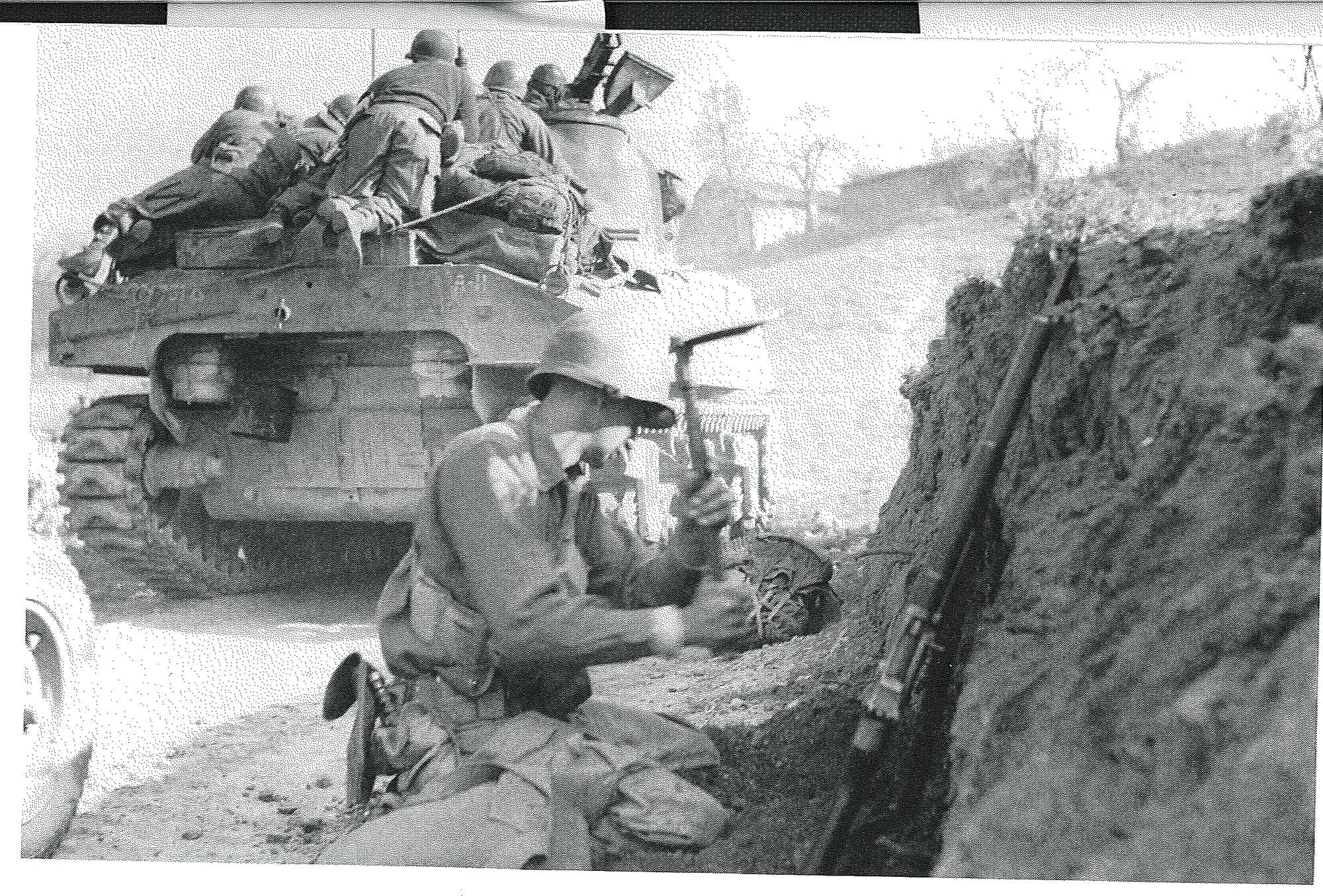
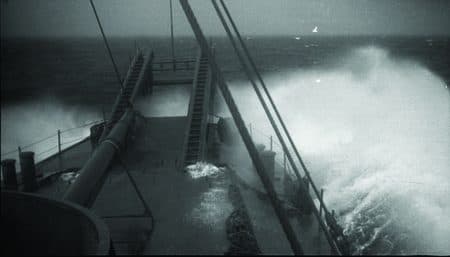
In June 1942, 6 months after the attack on Pearl Harbor, Japanese forces invaded and established garrisons on Attu and Kiska Islands. Located to the far west of mainland Alaska, the Japanese garrisons were able to launch attacks on two American military bases in Dutch Harbor. By March 1943, the United States Navy established a blockade around Attu and Kiska Islands, severely limiting resupply to the entrenched Japanese garrisons to infrequent deliveries by submarine. American efforts to regain the islands began with Operation Landgrab in March 1943. The ensuing Battle of Attu was the only land battle fought on American soil during World War II. By June 1, 1943, Attu Island was reclaimed. Operation Cottage was launched on August 15, where 35,000 soldiers landed unopposed on Kiska Island, only to discover that the Japanese garrison had evacuated weeks earlier. The Battle of the Aleutian Islands officially ended August 24, 1943.
September 1939 to 1945
The Atlantic Battles
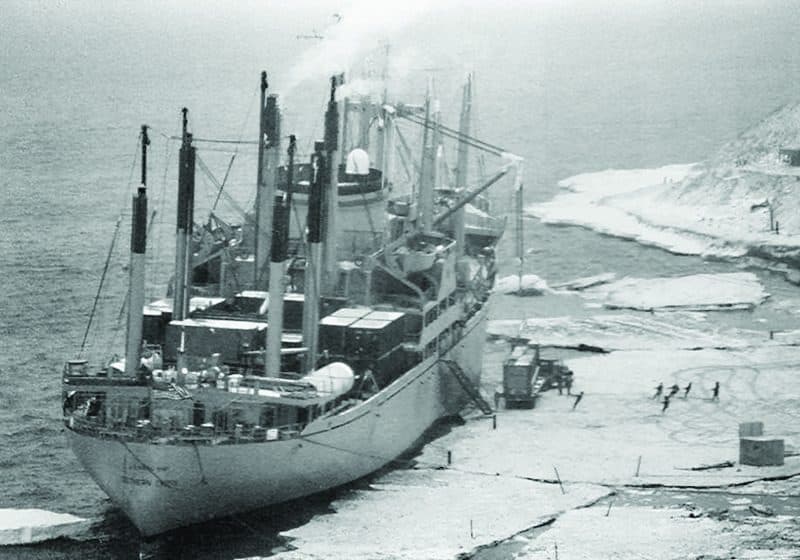
The Battle of the Atlantic pitted Allied convoys - transporting military equipment and supplies to Great Britain and the Soviet Union - against German U-boats and warships in a concentrated effort to control the shipping lanes of the Atlantic Ocean. Large-scale use of German U-boats, attacking on the surface with torpedoes by night and re-submerging to evade warship escorts, wreaked heavy tolls on Allied convoys. 1942 saw an increase in U-boat production, with devastating effects; 1,664 Allied ships sunk. In 1943, the Allies increased the presence of escort aircraft carriers with long-range aircraft, effectively covering the Atlantic Gap. Depth charges, deployed by transport ships, were also effective in reducing U-boat casualties. By the end of the war, the Merchant Navy lost more than 30,000 men and 3,000 ships in the effort to keep the European and North African Theaters supplied.
December 1943 to May 1945
China-Burma-India
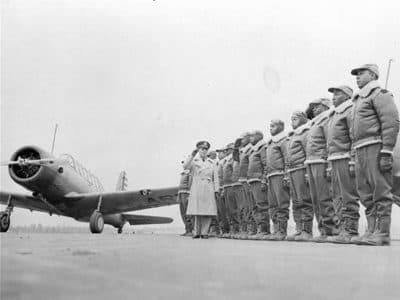
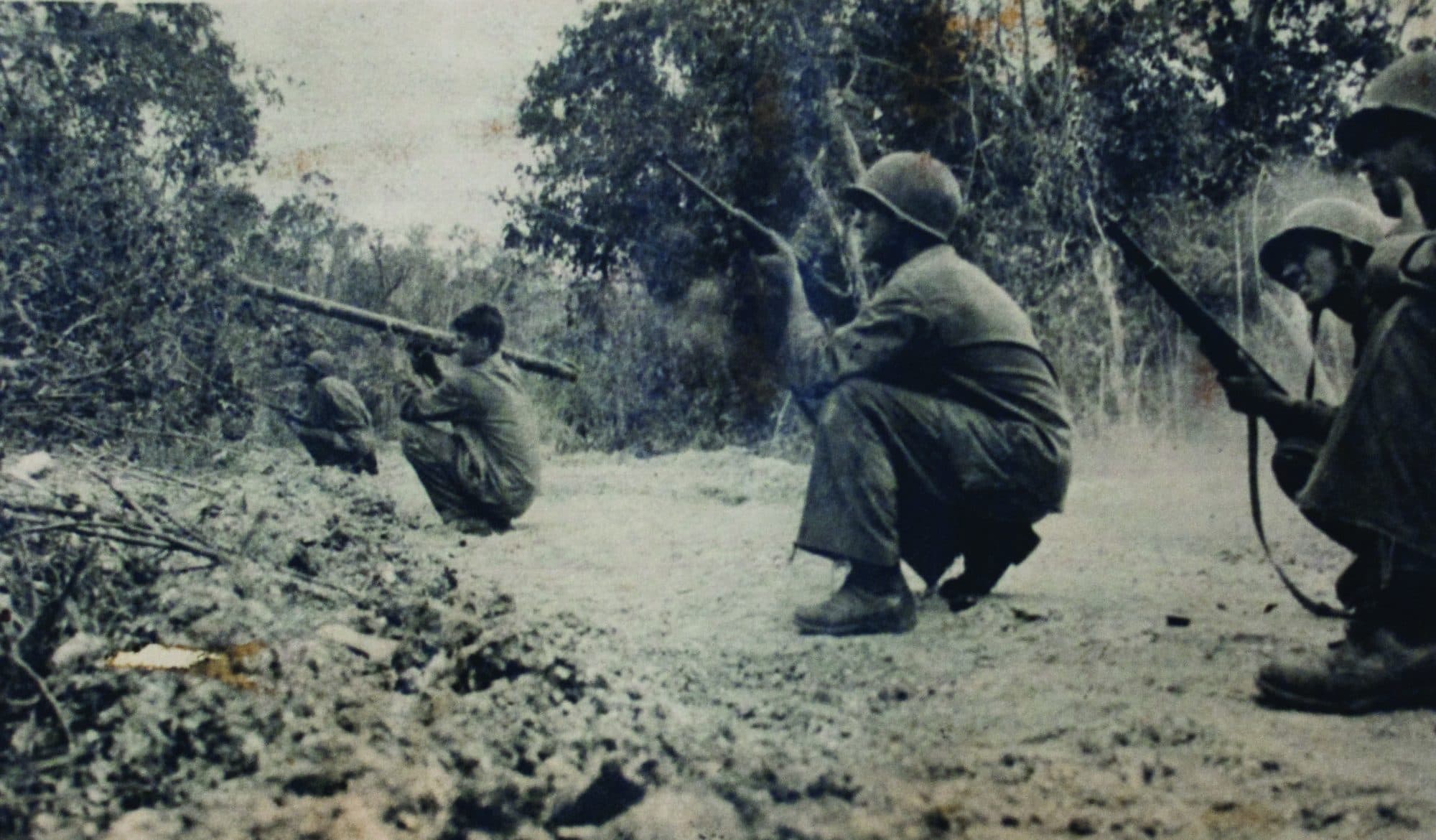
When the Japanese completed the conquest of Burma, then part of the British Commonwealth, on 20 May 1942, they forced Allied troops (British, Indian and Chinese) from the area and effectively cut the Burma Road, the last overland supply route to China. In December 1943, the Allies launched an offensive from India in an effort to retake Burma and to reopen an overland supply route to China. The Allied Southeast Asia Command authorized three major drives to free Burma: Two American trained Chinese divisions (U.S. LTG Joseph "Vinegar Joe" Stillwell and later U.S. LTG Daniel Sultan) drove into Burma from the north and built the Ledo Road, a link to the Burma Road; the 'Chindit" guerrillas of British MG Orde Wingate (until his accidental death in March 1944) operated successfully behind Japanese lines in central Burma; and the largest and most important drive was assigned to the British Fourteenth Army along the Imphal Front. The Japanese Burma Area Army provided stubborn resistance against the advances, but efficient Allied logistical and tactical air support proved decisive in the Burma campaign. By December 1944 the Chinese drives from the north and British offensives from the west and northwest linked up and in March 1945 the Burma Road was reopened. On 3 May 1945 the British XV Corps took Rangoon, Burma's capital, by amphibious assault, forcing the remnants of the Burma Area Army to retreat into Thailand and freeing Burma from nearly three years of Japanese occupation.
Germany
During the 1945 battle for Germany, the Americans effectively led the World War II Allied effort in the West; but in accommodating the Soviets, whose Red Army was invading from the East, they won military victory at a great geopolitical cost.
August 1942 to February 1943
Guadalcanal Solomon Islands
Located in the southern Solomon Islands in the South Pacific, Guadalcanal marked the Allies’ first major offensive against the Japanese in the Pacific. The Japanese defeat at Midway enabled the Allies to drive an offensive in the South Pacific for the first time in World War II. Guadalcanal held strategic and tactical importance. By the end of June 1942, the Japanese were constructing an airstrip on the island, a major threat to American and Australian bases in the area. The 1st US Marine Division landed on Guadalcanal on August 7, 1943, and achieved complete tactical surprise on the Japanese garrison. Months of intense jungle combat, as well as six major naval battles, followed. The Marines gained control of the Japanese airfield, renamed Henderson airfield, and completed construction. Their work paid off on August 20, when 19 Wildcat fighters and 12 Dauntless bombers landed at the airfield, providing Allied air supremacy in the coming months. Jungle battles wrought immense fatigue on both sides, and the 1st US Marine Division was replaced by the 25th Infantry Division and the 2nd US Marine Division in November 1942. Emperor Hirohito ordered a withdrawal of Japanese forces from Guadalcanal, which was carried out January and February 1943. Allied control of Guadalcanal ensured secure passage for the United States and provided an amassing point for a major Allied assault on Japan.
July 1943 to May 1945
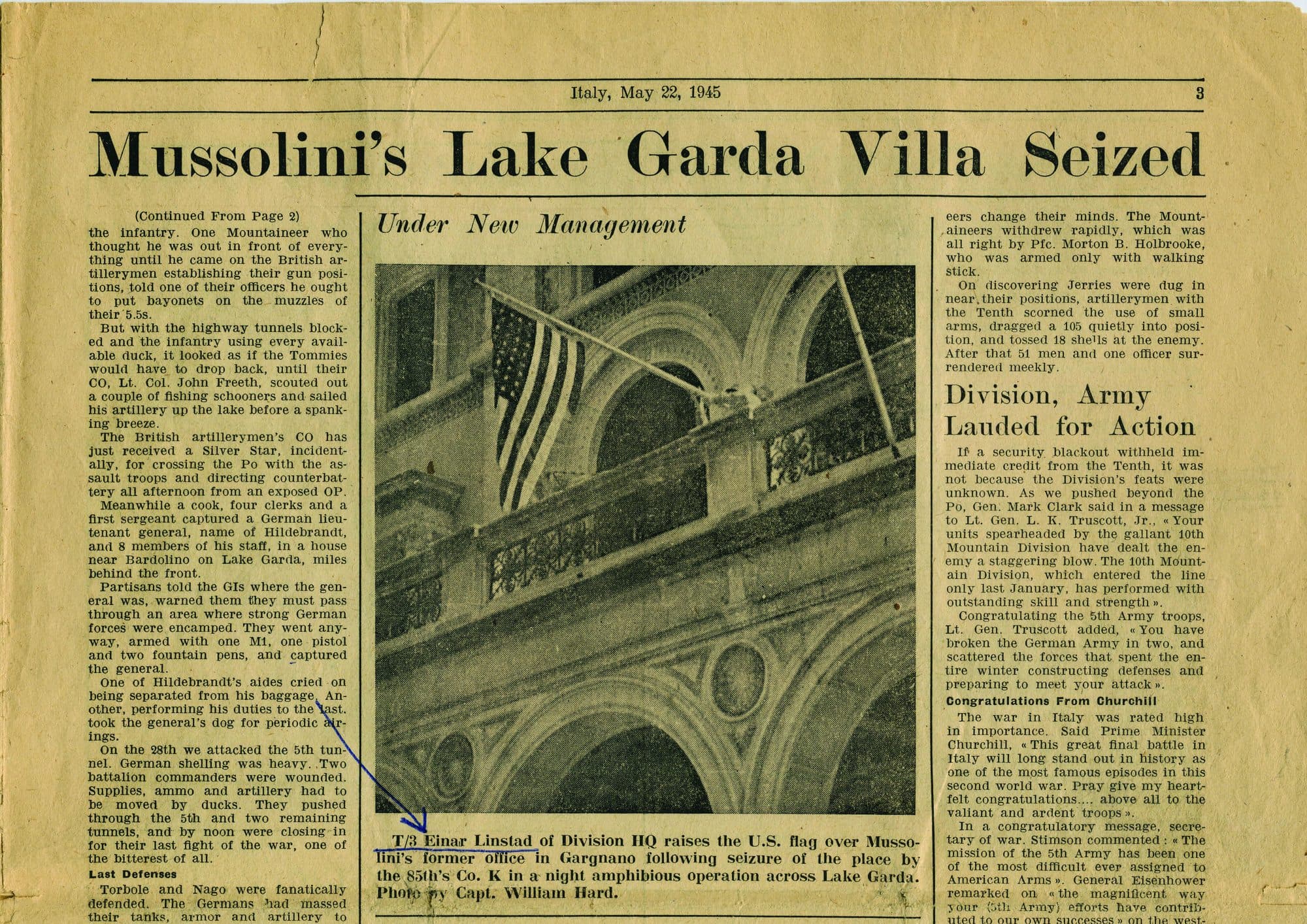
Italy Invasion
Sicily (July 10-17, 1943), Italy (September 3-16, 1943) and the Italian Campaign (July 10, 1943 to May 2, 1945).
February 19 to March 26, 1945
Iwo Jima
Iwo Jima occupied a position of strategic importance to the Allies in the Pacific, providing an air base for long-range bombing missions against mainland Japan. The island would serve as an emergency landing strip for B-29 bombers between their Japanese targets and the American-controlled Marianas Islands. Air raids carried out by the 7th Air Force B-24 heavy bombers began June 1944, followed by landings of the 4th US Marine Division and the 5th US Marine Division on February 19, and the 3rd US Marine Division on February 24, 1945. Four days later, the 28th Marines of the 5th US Marine Division raised the American flag on Mount Suribachi. The Battle for Iwo Jima saw 27 Medals of Honor awarded to Marines and Sailors, many post-mortem, more than were awarded for any other single operation during the war. The captured island served its strategic purpose. By the end of World War II, 2,400 B-29 bombers carrying 27,000 crewmen made emergency landings on Iwo Jima.
August 6, 1945
Japan
The U.S. XXI Bomber Command (MG Curtis LeMay) of the U.S. Twentieth Air Force was able to begin large scale strategic bombing of the Japanese mainland after enlarging the captured airfields in the Marianas (Saipan and Tinian). On the night of 9-10 March 1945, 334 U.S. B-29s dropped over 1,667 tons of incendiary bombs on Tokyo. The fire-bombing Raid on Tokyo was the most destructive single air raid in history (the 183,000+ casualties were greater than either atomic bombing). Meanwhile, the U.S. had detonated the first experimental atomic bomb at Alamogordo, New Mexico. Immediately, high-ranking U.S. government officials began debating whether this awesome new weapon should be used and, if so, how it would be used. After extensive study, the Joint Chiefs of Staff and other senior government officials recommended that the weapon be used. They firmly believed that the Japanese military(still with over 4,000,000+ veteran combat troops in Japan, China and Manchuria) would not surrender prior to, and thereby forcing, an Allied invasion of the Japanese home-islands. The U.S. strategists theorized that over 1,000,000+ Allied casualties and several millions of Japanese military and civilian casualties would unavoidably result from any invasion of Japan. The decision by America's leaders to drop the atomic bombs was, therefore, based on the belief that the use of the weapons, terrible as they were, would help to quickly end the war and would undoubtedly save more lives, Allied and Japanese, than the bombs would take. Accordingly, the U.S. and Britain sent an ultimatum to Japan (the Potsdam Proclamation of 27 July 1945 demanding immediate, unconditional surrender or it would mean "...utter devastation of the Japanese homeland.") which the Japanese ignored. On 6 August 1945, a U.S. B-29 Superfortress (Enola Gay) dropped a single atomic bomb over Hiroshima, an important military headquarters, supply depot, and a city of over 300,000 inhabitants on Honshu, destroying over 60% of the urban area and inflicting over 149,000 total casualties.
June 4 to 7, 1942
Midway Island
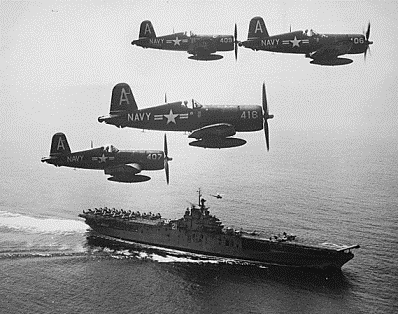
The Battle of Midway was the turning point in World War II for the Allies in the Pacific Theater. Advances in code breaking enabled the United States to counter the Japanese ambush of the remaining American carrier fleet at Midway Atoll, a 2.4 square mile stretch of land roughly equidistant from North America and Asia. Intercepted code allowed the Pacific Fleet Commander, Admiral Chester W. Nimitz, to prepare for the attack down to day-of-battle positions of the Japanese carriers under Japanese Fleet Commander Admiral Yamamoto Isoroku (American syntax: Isoroku Yamamoto). The morning of June 4, 1942, American scout planes sighted the Japanese fleet. American carrier-based air power caught the Japanese fleet refueling and rearming aircraft, making the ships vulnerable to dive-bombers. Four Japanese fleet carriers – the Akagi, Kaga, Soryu, and Hiryu – the entire strength of the task force, were sunk alongside the heavy cruiser Mikuma. The Battle of Midway was a decisive battle that enabled the United States to push toward recapturing the Pacific, island-hopping to Japan.
D-Day, June 6, 1944
Normandy
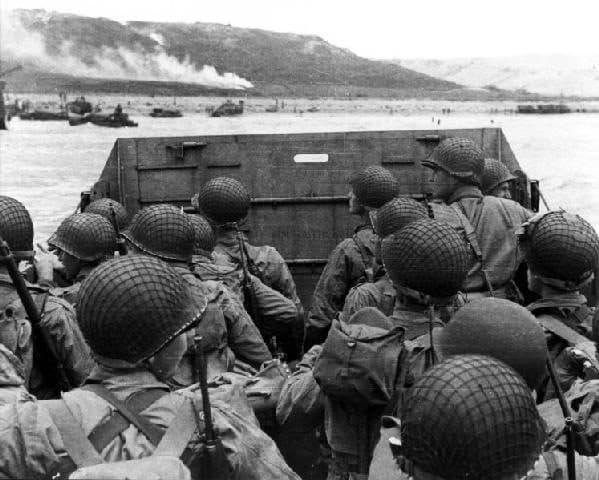
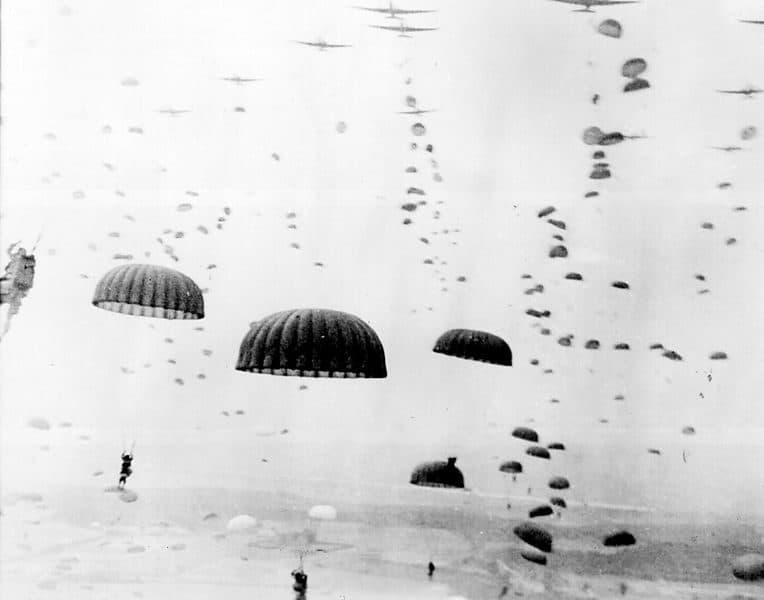
Operation Overlord, the Allied invasion of Normandy, France was launched the evening of June 5, 1944. Ground forces landed on Omaha, Utah, Sword, Juno, and Gold beachheads on June 6, 1944 – D-Day. An amphibious assault was conducted with an armada of 3,000 landing craft, 2,500 ships, and 500 naval escort and bombardment vessels, while 822 aircraft carrying paratroopers and towing gliders dropped soldiers behind German beach fortifications. The US 82nd and 101st Airborne Divisions, and the British 6th Airborne Division were deployed to block German approaches to the beachheads, secure causeway exits off the beachheads, and to capture Cherbourg to provide Allied forces with a port of supply. As the Allies moved inland, hedge groves in the region (called “bocage country") provided German forces with cover for their anti-tank and machine gun nests. The hedges also exposed the Allies’ Sherman tanks and mechanized units to German Panzer and Tiger units. However, due to the size of the German tanks, Panzer and Tiger units fought mainly in open fields, where they were vulnerable to Allied airpower. Fighting in Normandy was fierce and bloody; German defeat in Normandy would mean the loss of France before Allied forces turned on Nazi Germany itself. By mid-July, Allied forces controlled the Normandy region, and Hitler gave permission for withdrawal from Normandy on August 16. Only eight days later, Paris was surrendered to the French resistance. Operation Overlord was the largest air, land, and sea operation undertaken before or since June 6, 1944. The landing included over 5,000 ships, 11,000 airplanes, and over 150,000 service men.
September 13, 1940 to May 13, 1943
North Africa
Italy declared war on the Allied Nations (Great Britain and France) on June 10, 1940, and immediately began a campaign against the British in North Africa. Italy had a strong presence in North Africa, and Benito Mussolini dreamed of expanding that presence toward the same territories of the old “Roman Empire.” Chief among the desired territories was Egypt, where British garrisons were stationed to protect the Suez Canal and Royal Navy bases at Alexandria and Port Said. Italy crossed over the Egyptian border from Libya and invaded British protectorate Egypt on September 13, 1940. A British counter-attack in December saw the capture of over 130,000 Italian soldiers. General Erwin “The Desert Fox” Rommel arrived in February 1941 to take command of troops sent to reinforce the Italians. The German units rapidly grew to the size of an Army Corps and were renamed the Deutches Afrika Korps (German Africa Corps). In March, Rommel led an attack on the Egyptian border, where a stalemate developed until the British forced a retreat in November. The two forces conducted a series of operations that frequently shifted the lines of power over the Egyptian border. The Axis powers aimed to control the colonial resources of North Africa, cut off Great Britain from its resources in Asia and Africa, and deprive the Allies of access to Middle Eastern oil supplies while securing if for the Axis. The final Axis offensive of the Western Desert Campaign was launched August 30, 1942. The British halted the offensive on September 3, counterattacking on October 23. By November 2, the Axis troops were forced to withdraw, retreating rapidly across Libya and abandoning Tripoli, the Libyan capital, on January 23, 1943, reaching Tunisia a week later.
December 7, 1941
Pearl Harbor
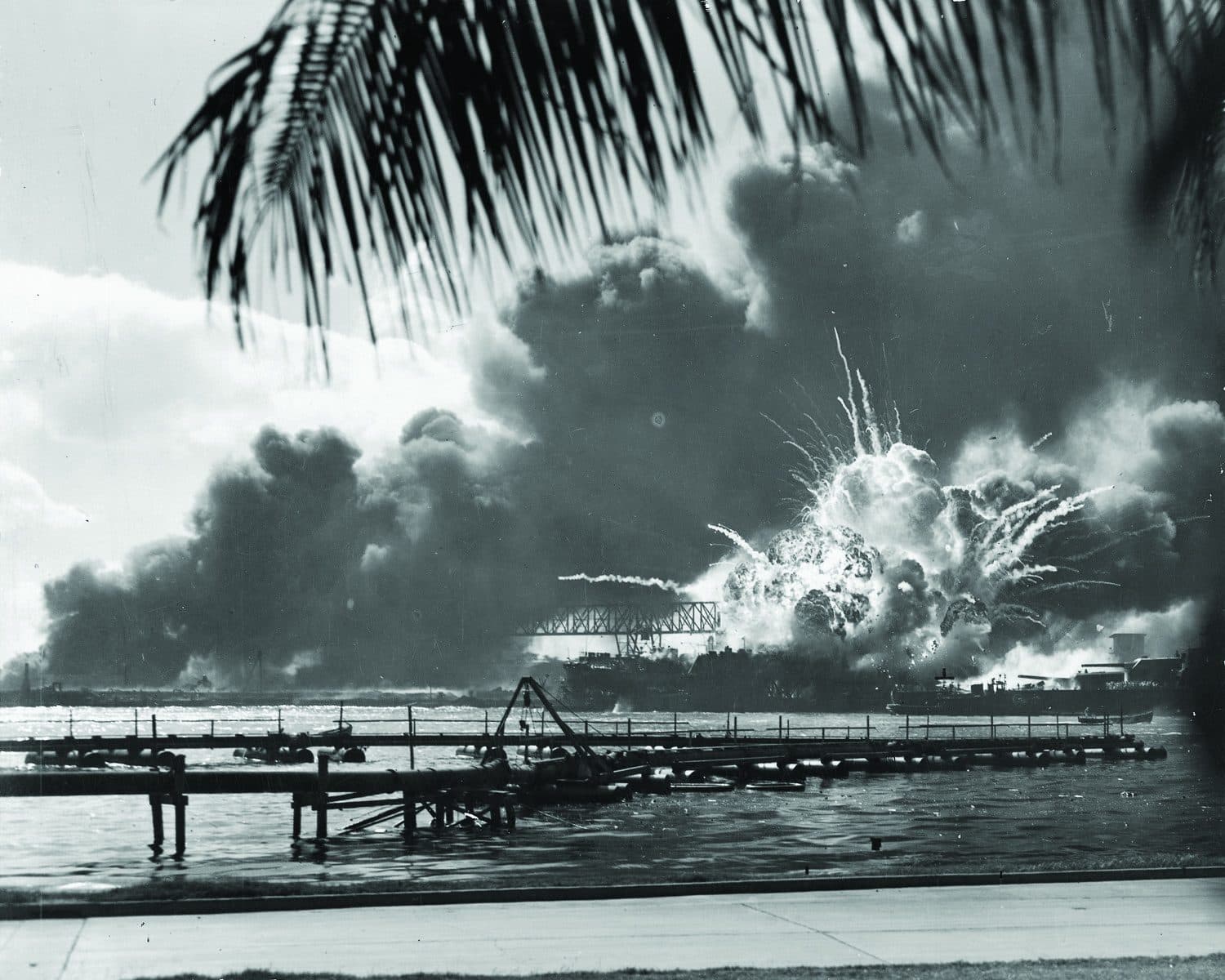
At 6 am on December 7, 1941, six Japanese carriers launched an attack on Pearl Harbor, Oahu, Hawai’i. While the oncoming force was spotted by an alert operator of an Army radar station in Opana, initial reports were dismissed by officers as an approaching group of American planes set to arrive that morning. The Japanese fleet achieved total surprise, hitting American warships and military installations on Oahu shortly before 8 am. Navy air bases at Ford Island and Kaheohe Bay, as well as the Marine field at Ewa, and Army Air Corps fields at Bellows, Wheeler, and Hickam were bombed and strafed simultaneously with the attack on Pearl Harbor. While a few pilots were able to get airborne in an attempt at countering the attack, casualties were high. 3,581 military personnel and civilians were killed or injured. Twenty-one ships were sunk or damaged and 188 aircraft destroyed, and another 159 damaged. However, the Japanese assault failed to damage American aircraft carriers – which were away from the harbor – and the shore side facilities at Pearl Harbor Naval Base. All but three of the sunken and damaged ships were raised and repaired. In an immediate response, the United States declared war on Japan on December 8, 1941, officially entering World War II.
December 7, 1941 to May 5, 1942
Philippines
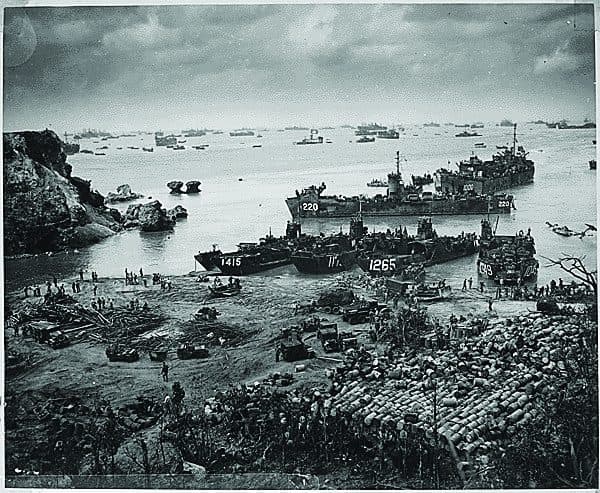
The Philippine Islands, a territory of the United States since the 1898 Treaty of Paris, was invaded by the Japanese just ten hours following the attack on Pearl Harbor, Hawai’i. A strategic position between Japan and the South Pacific, Japanese forces launched an air strike against the islands of Luzon and Mindanao on December 8, 1941, catching the American forces under General MacArthur by surprise. By December 10, the Japanese achieved air supremacy and the first forces landed on Luzon and Mindanao on December 20. “Again and again […] tactics would be repeated. Stand and fight, slip back and dynamite” (MacArthur), as the American forces retreated up the Bataan Peninsula. On April 9, 1942, General Edward King of the US II Corps surrendered all troops on the Bataan Peninsula, followed by General Wainwright at Corregidor on May 6, 1942. The last American troops in the Philippine Islands surrendered on Mindanao on May 12, 1942. The months to follow wrought some of the most horrific stories of the war in the Pacific, including the 60 mile forced Bataan Death March.